Light, Shadow, and the Art of Stillness
A technical exploration of the lighting philosophy that defines the Cock Photography studio's distinctive look.
A technical exploration of the lighting philosophy that defines the Cock Photography studio's distinctive look.
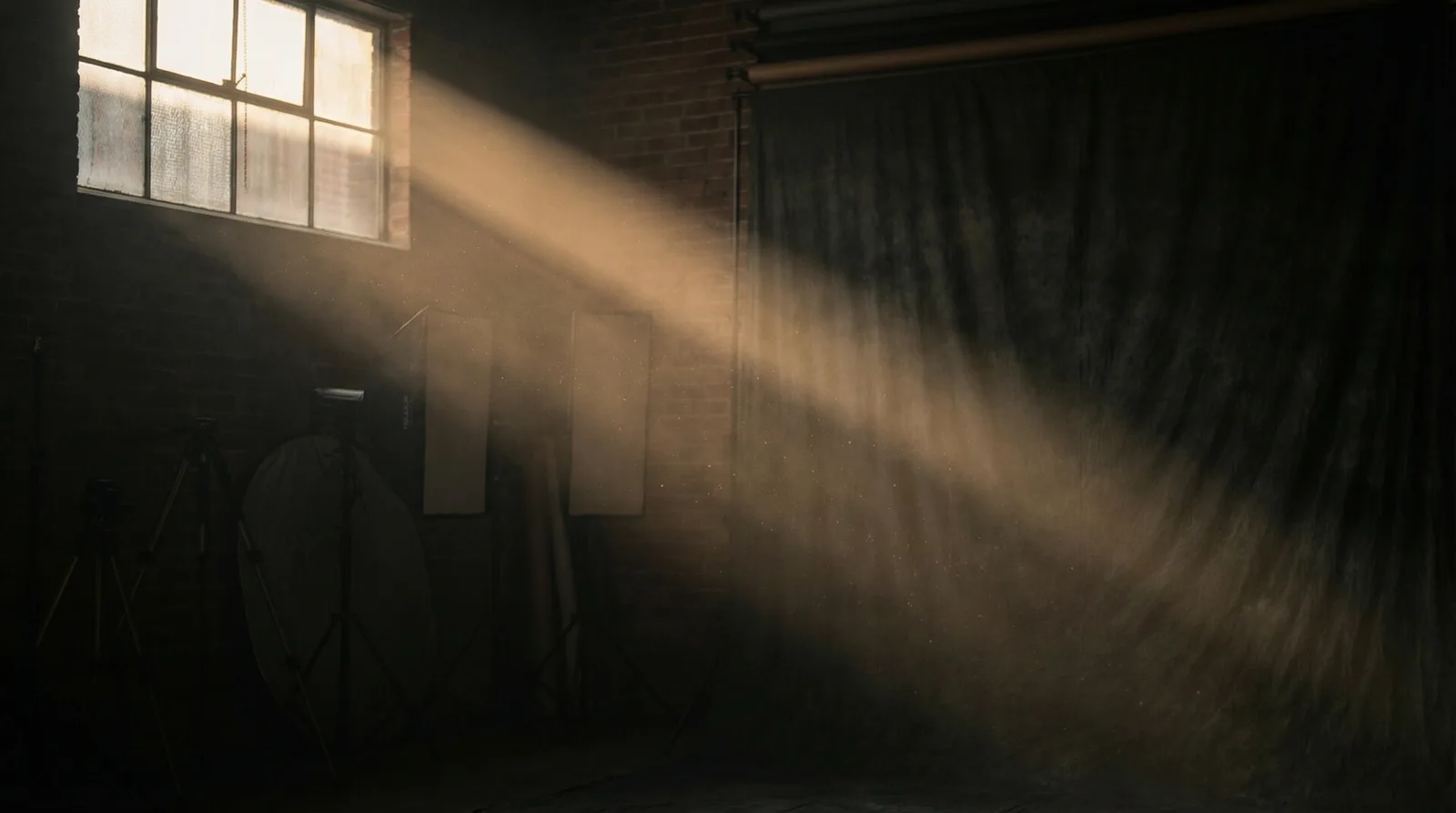
Window light falling across a studio backdrop, dust motes visible in the beam
There is a particular quality of light — soft, directional, with just enough fall-off to suggest depth without losing detail — that defines the best portrait work. It is not difficult to achieve technically. It is enormously difficult to achieve with intention.
Alistair has always preferred natural light, and the studio was designed accordingly. The north-facing windows provide a consistent, cool illumination that wraps around the subject without the harshness of direct sun. On overcast days — which in London means most days — the light is close to perfect.
We supplement with reflectors, occasionally a single fill, but never strobes. The reasoning is straightforward: a rooster’s plumage has an iridescence that responds to continuous light sources in ways that flash cannot replicate. The shift from green to copper across a single breast feather requires a sustained, directional source to render faithfully.
Our work is defined as much by what we conceal as what we reveal. Shadow provides weight, dimensionality, and narrative. A face half in darkness suggests interiority. A figure emerging from black implies arrival, significance, the unseen story before the frame.
In the After Hours series, shadow is the primary compositional element. The amber light sources — a desk lamp, a streetlight, the glow through a pub window — exist to define the darkness around them. The subjects are discovered within it, not illuminated by it.
As master printer, my role is to ensure that the subtleties captured in-camera survive the translation to paper. The tonal range of a properly exposed medium format negative is extraordinary, and preserving that range — particularly in the deep shadows and the fine highlights of plumage — requires a calibration process that I have refined over many years.
We print exclusively on Hahnemühle Photo Rag 308gsm, using archival pigment inks rated for two hundred years of light stability. Each print is hand-inspected under D50 lighting before it leaves the studio.
The standard we hold ourselves to is simple: if a single feather reads as flat, the print is rejected.